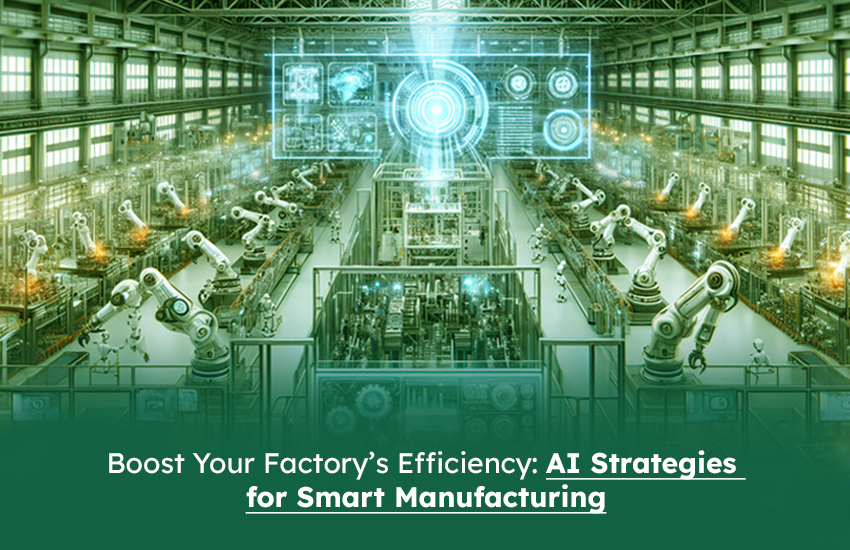
AI in manufacturing is causing significant disruption in the manufacturing sector. Businesses are adopting industrial AI to improve the intelligence, speed, and efficiency of their factories through generative design and predictive maintenance. Businesses may increase efficiency, decrease downtime, and produce products of extraordinary quality by incorporating machine learning into their production processes.
To keep ahead of the competition, progressive businesses in India and throughout the world are utilizing AI-driven solutions and digital transformation tactics. Let's examine the best AI strategies for smart manufacturing that can help you increase productivity and prepare your business for the future.
Find out more about AI in manufacturing by checking out our blog, “Boosting Productivity with AI in Manufacturing - A Complete Guide”!
Unexpected equipment failure is one of the largest problems that manufacturers deal with. Conventional maintenance techniques are frequently reactive, resulting in delays and expensive downtime. AI-powered predictive maintenance manufacturing in manufacturing settings fundamentally alters this strategy.
Artificial intelligence (AI) systems can identify trends and forecast when a machine is likely to break by evaluating real-time sensor data and using machine learning in manufacturing. This enables businesses to plan maintenance in advance, reducing unscheduled stops and prolonging the life of equipment.
AI systems, for instance, are able to examine temperature, pressure, and vibration data from machinery to spot irregularities that human operators might overlook. By ensuring that maintenance is performed at the ideal time - neither too early nor too late - this type of data automation maximizes both cost and productivity.
In manufacturing, delivering consistently high-quality products is essential. Manual inspections are frequently laborious and prone to mistakes. Real-time defect detection is made possible by quality control automation that is driven by AI-driven image recognition and sophisticated sensors.
AI systems are able to quickly and accurately analyze components, guaranteeing that only goods that precisely match specifications are produced. Even during off-peak hours, these automated checks can operate continuously, saving personnel expenses and increasing production.
Better consumer data analysis is also made possible by the use of AI into business processes, which connects quality trends to customer feedback. By guaranteeing that items constantly live up to expectations, this improves the consumer experience.
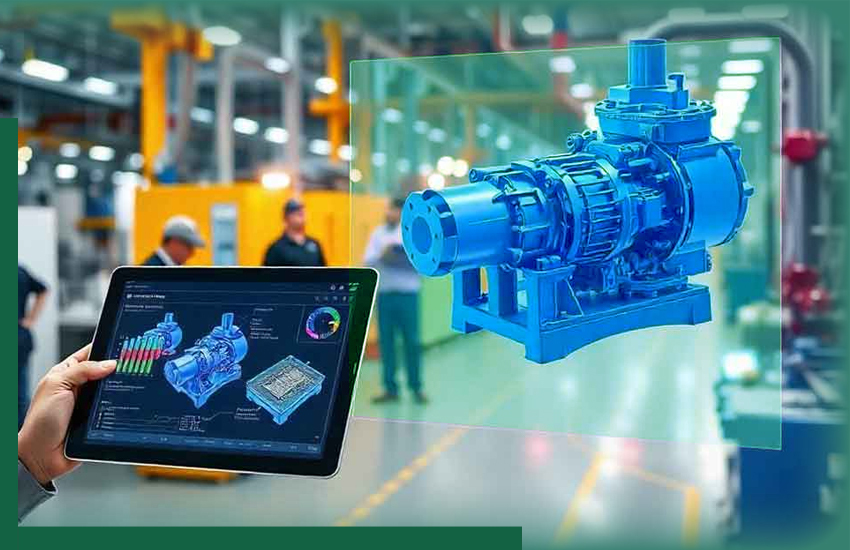
One of the most potent ideas in contemporary manufacturing is the digital twin. A virtual version of a real system, procedure, or product is called a digital twin manufacturing model. Manufacturers can model, track, and improve manufacturing operations in real time by utilizing AI and data analysis.
Digital twins, for instance, can forecast a machine's behavior in various scenarios, enabling engineers to make adjustments before problems arise. Digital twins and (artificial intelligence) AI in manufacturing enable companies to perform "what-if" scenarios to find bottlenecks, maximize energy use, and increase throughput.
At the core of the smart factory is this proactive strategy, which gives companies the confidence to make data-driven decisions.
AI is also excellent at designing goods that are economical, lightweight, and efficient. Based on predetermined objectives and limitations, generative design in product manufacturing employs AI algorithms to investigate hundreds of design options.
The AI creates the best possible design options based on the factors that engineers enter, such as materials, weight restrictions, and production techniques. This helps businesses create better-performing products more quickly, enhances innovation, and shortens design cycles.
Generative design, when paired with digital transformation initiatives, helps businesses transition from iterative trial-and-error to AI-driven design workflows, increasing productivity and innovation at the same time.
The everyday operations of factories are being revolutionized by AI automation. Artificial intelligence (AI) frees up human workers to concentrate on high-value tasks like creativity and problem-solving by automating repetitive tasks like scheduling, inventory management, and production planning.
Industrial AI solutions, for example, are able to autonomously modify production schedules in response to current machine availability and demand. AI-powered systems can efficiently route resources, optimize energy use, and even dynamically modify workflows to accommodate interruptions.
This degree of data automation improves the smart factory's overall agility and fortifies it against changes in the supply chain and consumer expectations.
AI is changing how manufacturing organizations interact with their partners and consumers in addition to changing the work floor. Businesses may more successfully match manufacturing output with customer demand by combining production data with Customer Relationship Management (CRM) AI and sales automation tools.
For instance, AI-driven forecasting can automatically modify production scheduling to meet demand when customer orders are entered into a CRM system. Manufacturers can predict demands, spot trends, and provide individualized service by analyzing customer data.
In addition to cutting lead times, inventory waste, and overproduction, this close coordination between sales and production enhances the customer experience.
Data analysis is the foundation of any AI in business planning. From production lines and machine sensors to supply chains and customer interactions, factories produce enormous volumes of data every second.
Manufacturers can find hidden trends and insights to help them make better decisions by utilizing AI-driven analytics. AI in manufacturing gives leaders access to real-time intelligence for tasks like identifying production line inefficiencies, forecasting market demand, and optimizing the usage of raw materials.
Digital transformation has a significant impact on the industrial sector because of this analytical capability, which keeps businesses inventive and competitive.
Benefits of AI in manufacturing go beyond improved operational effectiveness. Businesses that implement industrial AI strategies can:
Use automation and predictive maintenance to reduce costs.
Improve product quality through AI-powered examination
Use generative design technologies to accelerate design cycles.
Boost flexibility with real-time data analysis and digital twins
Enhance customer experience by integrating CRM and AI.
Stronger market positioning, increased innovation, and increased profitability are the results of these achievements.
AI implementation in manufacturing calls for the appropriate approach, tools, and knowledge. Manufacturers can easily incorporate AI, digital twin models, and data automation tools into their operations with the assistance of businesses like Modelcam Technologies.
Modelcam's engineering and CAD skills support digital transformation journeys customized to meet the specific requirements of each facility, from consulting to implementation. Working with professionals guarantees that your smart factory approach is scalable and future-proof, regardless of whether you're investigating generative design, quality control automation, or predictive maintenance in product manufacture.
AI is now a strategic advantage in contemporary industry, not just a sci-fi idea. Businesses can achieve unprecedented levels of productivity and creativity by implementing AI automation, digital twin manufacturing, machine learning in manufacturing, and data-driven workflows.
The benefits of AI in manufacturing include lower costs, more intelligent operations, and improved customer relations. You can boost your factory’s efficiency and set the standard for smart manufacturing by implementing these AI tactics now.
Let’s connect: www.modelcamtechnologies.com
Email: sales@modelcamtechnologies.com
Mobile no : +91 8237016167
Modelcam Technologies provides a wide variety of Services from ART to PART from Concept Design to Industrial Modeling and Analysis for final Manufacturing.
©Copyright 2026. All rights reserved by Modelcam Technologies Private Limited PUNE.