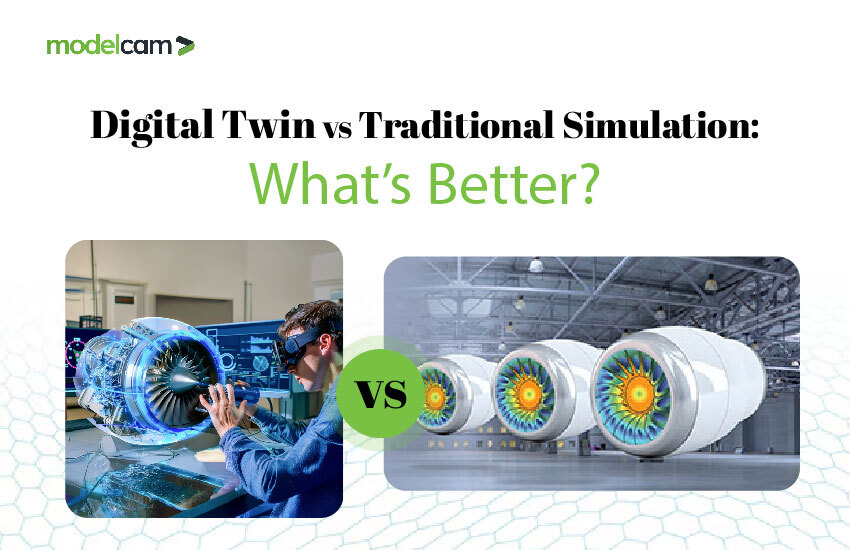
The design, testing, and process optimization of enterprises is being revolutionized by digital twin technology. Traditional simulation has been a reliable engineering tool for many years, but by fusing real-time data, artificial intelligence, and predictive analytics, digital twin technology is revolutionizing innovation.
Imagine being able to keep an eye on a machine, anticipate problems before they arise, and boost performance without interfering with daily operations. For this reason, engineering firms and manufacturers are increasingly using digital twin.
Does this imply, however, that conventional simulation is out of date? Or is it still useful in today's industries?
Let's examine the distinctions between traditional simulation and digital twin to determine which is more advantageous for modern enterprises.
Conventional simulation is a virtual model that is used to examine the behavior of a machine, system, or product under particular circumstances. Before designs are put into real production, engineers test them using simulation software.
An automobile manufacturer might, for instance, mimic how a vehicle behaves in a crash test. In a similar vein, a manufacturing organization can detect bottlenecks by simulating production flow.
Conventional simulations are beneficial because they:
Minimize the requirement for tangible prototypes
Reduce the cost of development
Enhance the design of the product
Assist developers in testing various scenarios
However, static data is typically the foundation of conventional simulations. After the simulation is finished, it doesn't keep updating itself with data from the real world. This restriction becomes important when companies require ongoing performance improvement and real-time monitoring.
A virtual duplicate of a real product, machine, procedure, or whole factory is called a digital twin. The digital twin constantly receives real-time data from sensors, IoT devices, and linked systems, in contrast to traditional simulation.
Modelcam Technologies claims that Digital Twin Technology creates dynamic digital representations of real assets by fusing IoT, AI, cloud computing, and advanced analytics. These digital models assist businesses in real-time operation monitoring, analysis, and optimization.
A manufacturing business, for instance, may build a digital twin of its production line. The virtual model accurately depicts the state of the factory floor and is continuously fed operating data from machines.
This enables managers and engineers to make well-informed decisions based on actual data rather than conjecture.
Traditional simulation uses preset datasets and presumptions.
Digital twin are constantly receiving data from sensors and connected gadgets. Businesses can monitor actual performance and quickly detect problems thanks to this real-time synchronization.
One of the main benefits of digital twin in manufacturing, where equipment performance is always changing, is this.
Conventional simulations can spot possible flaws in the design, but they are unable to forecast equipment breakdowns after the product is in use.
By examining machine conditions in real time, digital twin facilitate predictive maintenance. Algorithms powered by AI are able to identify odd trends and anticipate problems before they arise.
Predictive maintenance can drastically cut equipment downtime and maintenance costs by up to 30%, according to industry research.
Traditional simulations are frequently run throughout the testing or product design stages.
Digital twin are active for the duration of a product's lifecycle. Opportunities for ongoing optimization and increased operational effectiveness are therefore created.
PLM and digital twin integration are useful in this situation because they allow businesses to manage products from design to maintenance and retirement.
The primary objective of traditional simulations is scenario testing.
AI-driven analytics are used by modern digital twin software to extract more profound insights from operational data. Businesses can use AI-Driven Solutions for decision-making, performance optimization, and forecasting.
Businesses require quicker and more accurate insights from increasing amounts of data, which is why AI is becoming more and more crucial.
Conventional simulations typically concentrate on specific items or systems.
From a single machine to a whole factory, supply chain, or business function, digital twin are scalable.
Because of this feature, digital twin are essential to Digital Twin Industry 4.0 projects and contemporary Smart Manufacturing settings.
To understand the difference between the two quickly at a glance, you can have a look at the below table:-
| Feature | Traditional Simulation | Digital Twin |
|---|---|---|
| Data | Uses predefined data | Uses real-time data |
| Monitoring | Static analysis | Continuous monitoring |
| Maintenance | Reactive approach | Predictive maintenance |
| Optimization | Design-stage focused | Lifecycle optimization |
| AI Usage | Limited | AI-driven insights |
| Scalability | Single system/product | Factory-wide or enterprise-wide |
| Industry 4.0 | Limited support | Core Industry 4.0 enabler |
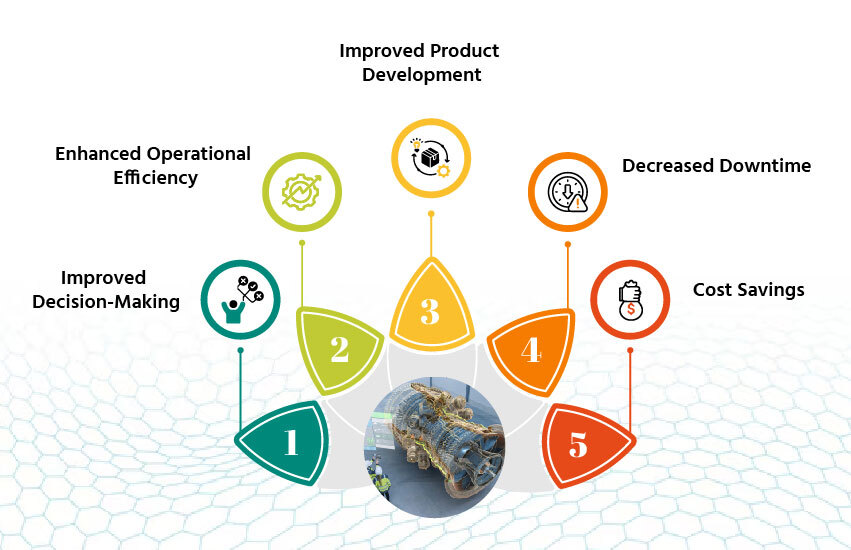
The numerous benefits that digital twin provide are what are driving their increasing popularity.
The following are some significant Benefits of Digital Twin Technology:
Organizations can make well-informed decisions more quickly when they have real-time visibility.
Companies are able to find bottlenecks, streamline processes, and cut waste.
Engineers can verify designs using real-world operational conditions thanks to digital twin.
Unexpected equipment breakdowns can be avoided with predictive maintenance.
Businesses can increase resource efficiency, minimize downtime, and avoid costly repairs.
These benefits account for the quick growth of digital twin applications in a variety of sectors, including manufacturing, automotive, aerospace, healthcare, and energy.
Find out more about benefits of digital twin technology through our blog post, “Top Benefits of Digital Twin Technology for Smart Manufacturing”!
CAD and digital twin integration are critical components of modern engineering.
Digital twin are built using CAD models.
Design files can be converted by engineers into sophisticated virtual models that change over the course of a product's lifecycle.
Businesses can enhance cooperation, speed up product development, and lower engineering errors by utilizing CAD in conjunction with digital twin.
To boost efficiency and optimize engineering workflows, companies like Modelcam Technologies assist companies in integrating CAD, PLM, IoT, and digital twin platforms.
Digital twin are useful outside of manufacturing settings, despite their widespread use in industry.
Digital twin can be used by businesses for:
Customer data analysis
Supply chain optimization
Asset management
Facility monitoring
Energy efficiency improvements
Digital twin help businesses increase customer happiness and operational visibility when combined with AI and sophisticated data analysis.
Digital twin, for instance, can help businesses better understand how customers interact with items in real-world settings, which can assist improve customer experiences.
By offering a more in-depth understanding of consumer behavior and product performance, this data can also assist Customer Relationship Management (CRM) AI endeavors.
Additionally, sales and support operations are being impacted by digital twin.
Businesses may enhance forecasting, service planning, and customer interaction by integrating digital twin data with sales automation tools.
AI-driven systems are able to evaluate operational data and make suggestions that help service and sales personnel.
Through data automation, this produces more effective workflows that enable companies to respond to client requests more quickly while requiring less manual labor.
The response is contingent upon corporate objectives.
Traditional simulation is still a useful and affordable option if a business merely needs design validation throughout product development.
However, digital twin are far more valuable if the objective is real-time monitoring, predictive maintenance, operational optimization, and AI-powered decision-making.
Digital twin solutions offer features that traditional simulations just cannot match for businesses looking to undergo digital transformation.
Digital twin services are becoming crucial for maintaining competitiveness as manufacturing becomes more data-driven and linked.
Modern engineering analysis was made possible by traditional simulation, but today's interconnected industries demand more than static models. To build smarter and more effective operations, Digital Twin Technology integrates real-time data, AI-driven insights, predictive maintenance, and continuous optimization.
Digital twin are assisting businesses in embracing Industry 4.0 and achieving new performance levels through anything from enterprise-wide optimization strategies to digital twin implementation in manufacturing facilities.
It is evident that intelligent, connected, and AI-powered digital twin are the way of the future as companies continue to invest in smart manufacturing and digital transformation.
How rapidly businesses can implement digital twin to remain ahead of the competition is now more important than whether they will eventually replace traditional simulations.
Let’s connect: www.modelcamtechnologies.com
Email: sales@modelcamtechnologies.com
Mobile no : +91 8237016167
Modelcam Technologies provides a wide variety of Services from ART to PART from Concept Design to Industrial Modeling and Analysis for final Manufacturing.
©Copyright 2026. All rights reserved by Modelcam Technologies Private Limited PUNE.