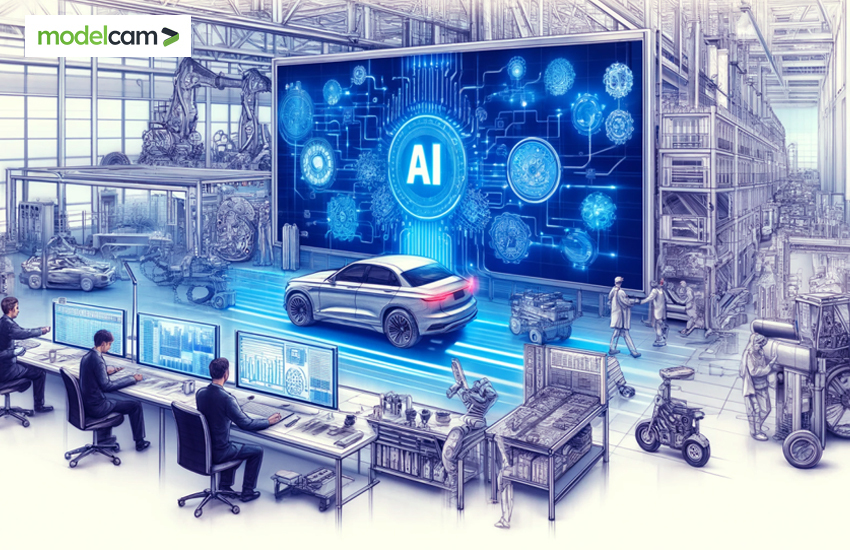
AI and automation are the main forces behind the automotive industry's rapid development. The automotive sector is undergoing the fastest digital transformation, from automotive engineering services that expedite product development to AI in automotive design that enhances accuracy and performance. By providing cutting-edge design tools, simulation technologies, and CAD/PLM expertise to assist manufacturers in innovating at scale, leading engineering solution providers like Modelcam Technologies continue to drive this transformation.
These days, R&D, production, simulation, testing, and the general consumer experience are all being transformed by AI-driven solutions. Let's examine how automation in the automotive industry is ushering in a new era of precision, efficiency, and wise decision-making.
Because AI in automotive design automates intricate engineering calculations, optimizes geometry, and lowers design errors, design cycles that previously took months are now being condensed into weeks. Teams can find the best combinations for strength, cost, and performance by using machine learning algorithms that evaluate thousands of design options.
Businesses that provide cutting-edge automotive engineering services today mostly rely on AI-powered CAD/CAE solutions. Engineers benefit from these tools:
Automate tedious, repetitive design tasks
Use generative design to create structures that are optimal
AI-driven design validation can increase accuracy
This is especially crucial for automotive CAD design, as the development cycle's success depends on accuracy and speed.
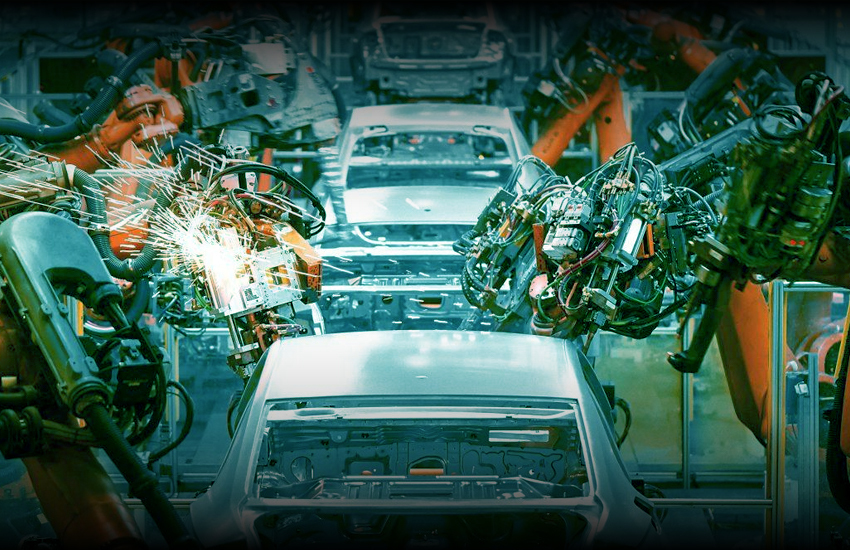
Manufacturing robots are just one aspect of the power of automation in automotive industry. Automation now affects all phases, including supply chain operations, design, testing, production, and quality control.
Automation powered by AI guarantees:
Quicker product development turnaround
Decreased human error
Digital pipelines for streamlined workflows
Improved collaboration across multidisciplinary engineering teams
Automation helps automakers launch vehicles more quickly and effectively by supporting complicated jobs like data handling, simulation workflows, and automotive design process automation.
Smarter, quicker automotive product development is required due to the trend toward electrification, sustainability, and autonomous mobility. Long before actual testing starts, OEMs and engineering teams can now perform simulations, produce virtual prototypes, and validate designs thanks to automation and artificial intelligence.
AI-powered engineering tools make it possible to:
Material optimization
Energy efficiency modeling
AI-driven design validation
Early defect detection
These developments greatly raise product quality while lowering overall development expenses.
Digital engineering plays a major role in the growth of electric mobility. In order to maximize battery management, thermal systems, structural integrity, and overall vehicle performance, electric vehicle engineering now relies on AI algorithms.
EV development is aided by AI through:
Modeling predictive performance
Forecasting battery deterioration
Intelligent energy management
Solutions for autonomous charging
Faster and safer innovation is made possible by automation, which also guarantees that EV systems are tested realistically using automotive simulation software.
The way engineers see and assess vehicle performance is changing as a result of the digital twin in automotive. Automotive teams may replicate situations, anticipate breakdowns, and optimize operations with the help of a digital twin, which is a real-time virtual replica of a physical vehicle.
Digital twins offer:
Instantaneous insights
Automotive predictive maintenance
Improved testing for connected and autonomous vehicles
In-depth analysis of consumer data for customized experiences
Improving long-term performance and creating safer, more effective mobility solutions depend on this.
Physical prototyping is expensive and time-consuming. Because of this, automotive simulation software plays a major role in early-stage testing, performance evaluation, and validation.
Simulations help teams test:
Crashworthiness
Aerodynamics
Thermal performance
Noise, vibration & harshness
Powertrain efficiency
By combining simulation with CAD/PLM technology, Modelcam technology builds more robust automotive design environments. This reduces costs and ensures better outcomes throughout the whole product lifecycle.
The next step in smart transportation, autonomous vehicle engineering, heavily relies on artificial intelligence. Self-driving systems use neural networks, sensor fusion technologies, and real-time data processing to make vehicles safer, more intelligent, and more responsive.
The following are examples of AI-driven autonomous engineering:
Object detection and recognition
Predicting driving behavior
Algorithms for path planning
Vehicle-to-vehicle (V2V) communication (V2V)
The creation of consistent training data, simulation settings, and validation workflows - all necessary for autonomous mobility - is facilitated by automation.
Using robotics, IoT sensors, and automated systems, modern industries are implementing smart manufacturing to optimize operations. This change, which is fueled by Industry 4.0 in the automotive sector, guarantees increased output, more adaptability, and better quality.
Important developments consist of:
Automated assembly
Robotic painting and welding
Automation of the supply chain
AI-powered quality checks
These solutions lower operating expenses and downtime while increasing efficiency.
Beyond engineering, artificial intelligence is changing how automakers engage with their clientele. AI-powered tools facilitate the study of client data, allowing for more sophisticated CRM systems, personalized services, and predictive support.
This comprises:
AI-driven CRM tools
Customer behavior prediction
Personalized marketing campaigns
Sales automation tools
Improved customer experience throughout the buying journey
Enhanced consumer satisfaction throughout the purchasing process
CRM AI is being used by automakers to improve customer loyalty over the long run.
Numerous parts, teams, and modifications are involved in the construction of modern vehicles. CAD/PLM for automotive is essential for maintaining the organization of designs, data, and procedures.
These systems facilitate:
Automation of centralized data
Smooth cooperation
Quicker handling of changes
Improved adherence to international standards
CAD/PLM integration that boosts productivity at every level of automotive R&D is Modelcam Technologies' area of expertise.
Digital mobility is the way of the future, and AI and automation are influencing it more quickly than before. Advanced technologies like automotive engineering services, (artificial intelligence) AI in automotive design, and automation in the automotive industry will continue to spur innovation as the automotive landscape shifts toward electrification, autonomy, and intelligent manufacturing.
These innovations, which range from digital twins in automotive systems to autonomous vehicle engineering, enable automakers, engineers, and tech leaders to create vehicles that are safer, smarter, and more efficient. The automobile sector is poised to move into a future driven by intelligent, automated, AI-driven solutions with the help of cutting-edge engineering partners like Modelcam Technologies.
Let’s connect: www.modelcamtechnologies.com
Email: sales@modelcamtechnologies.com
Mobile no : +91 8237016167
Modelcam Technologies provides a wide variety of Services from ART to PART from Concept Design to Industrial Modeling and Analysis for final Manufacturing.
©Copyright 2026. All rights reserved by Modelcam Technologies Private Limited PUNE.