The foundation of any pharmaceutical business is GMP documentation. It is almost impossible to ensure patient safety, regulatory compliance, and product quality without precise GMP documentation.
Imagine overseeing hundreds of high-quality documents each month, ranging from change control records and deviation reports to SOPs and CAPA reports. It requires precision, is time-consuming, and allows little opportunity for human error. Artificial Intelligence (AI) is altering the game in this regard.
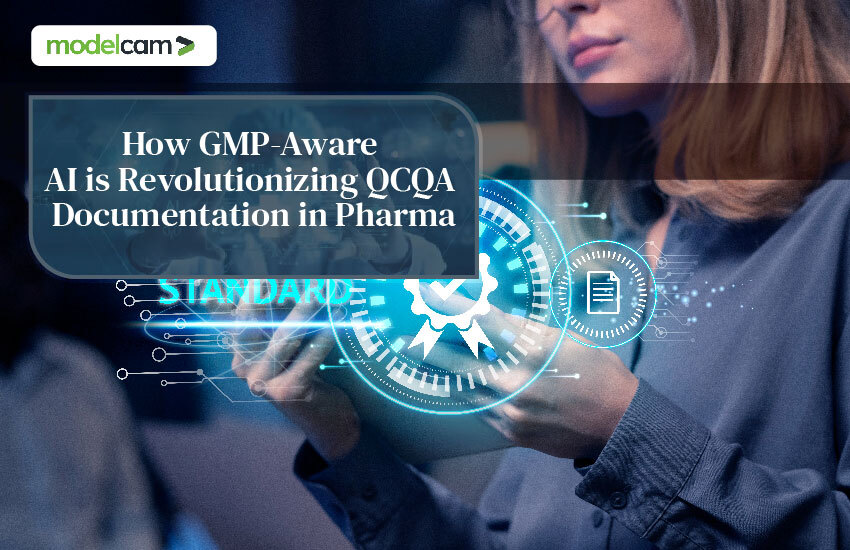
These days, AI is not only assisting companies in automating repetitive processes, but it is also revolutionizing pharmaceutical quality assurance and control by improving the speed, intelligence, and dependability of documentation. GMP-aware AI reduces human labor while assisting teams in producing compliance documents by comprehending pharmaceutical quality requirements.
Let's examine how this technology is changing pharmaceutical documentation going forward.
An AI-powered system created especially for pharmaceutical firms is called GMP-aware AI. It comprehends the structure, terminology, and legal requirements associated with GMP Compliance and pharmaceutical quality procedures, in contrast to ordinary AI technologies.
Rather than just producing text, it helps quality teams create papers that adhere to company-specific policies and industry standards. This improves the accuracy, consistency, and readability of the documentation.
AI in business is becoming a crucial component of everyday operations as pharmaceutical businesses continue their digital transition. AI is assisting businesses in increasing departmental efficiency through data automation and consumer data analysis. Quality documentation is currently where the pharmaceutical business is most affected.
Throughout the course of a product's lifecycle, every pharmaceutical company produces a significant amount of documentation.
Among the most popular documents are:
SOP Records
The CAPA Report
Report on Deviation
Change Control records
Validation reports
Audit reports
Training records
Every document needs to be accurate, comprehensive, and compliant with regulations.
A minor error in documentation might result in compliance issues, delayed approvals, or audit remarks. The U.S. FDA states that problems with documentation are still frequently found during inspections, underscoring the significance of keeping accurate records.
In order to lower documentation errors and boost efficiency, businesses are implementing AI-powered GMP documentation solutions.

It often takes several hours to prepare quality documents by hand.
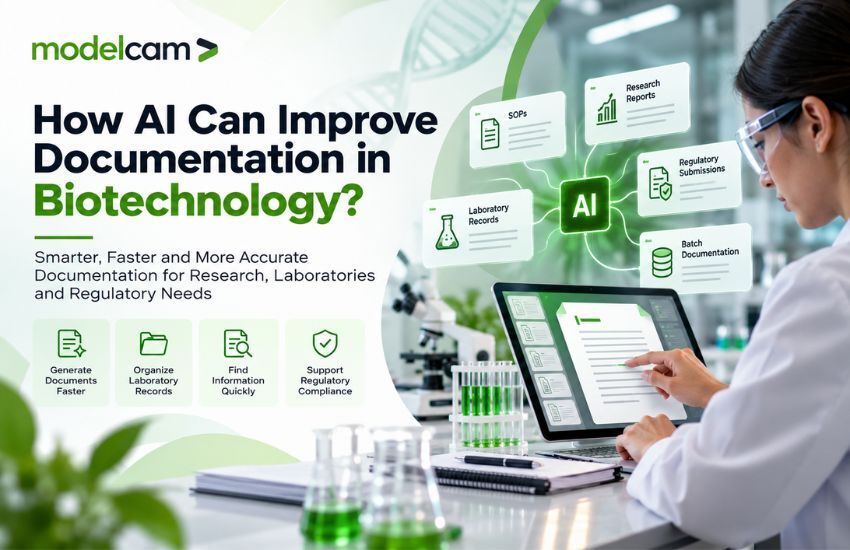
With AI for quality assurance in pharma, quality specialists can develop document drafts within minutes. Employees can concentrate more on reviewing rather than writing from scratch thanks to AI's suggestions for the proper format, necessary sections, and standardized language.
This expedites documentation without sacrificing quality.
It is common for various team members to use different language, formats, or writing styles.
SOP documentation, CAPA reports, and change control records all adhere to the same corporate standards thanks to AI's assistance in maintaining consistency across all documents.
Additionally, a uniform methodology improves the Quality Management System (QMS) as a whole.
For each batch that is put on the market, accurate quality control in pharmaceutical records must be maintained.
AI helps with quality control documentation preparation by eliminating missing data, organizing information, and recommending required sections.
As a result, quality teams concentrate more on product quality and spend less time editing papers.
Creating inquiry reports is one of the most time-consuming tasks in quality management.
Because creating an effective report necessitates appropriate investigation, corrective actions, preventive activities, and supporting evidence, many professionals look for how to write a CAPA report online.
By suggesting logical document structures and making sure crucial information is included, AI streamlines this process.
AI-generated templates can be a good place to start for teams searching for an example of a CAPA report while still allowing for human inspection and approval.
A well-written CAPA report not only resolves the current issue but also keeps similar problems from happening in the future.
Timely evaluations, consistent processes, and correct documentation are essential to the success of a pharmaceutical quality management system.
Every phase of the documentation lifecycle is supported by AI via:
Producing uniform documents
Cutting down on manual typing
Enhancing the Analysis of Data
Providing Support for Root Cause Analysis
Keeping documents consistent
Assisting groups in maintaining compliance
Organizations can enhance product quality and operational efficiency by fortifying the Pharmaceutical Quality Management System.
Examining thousands of documents is frequently necessary to get ready for regulatory inspections.
Documents are arranged, searchable, and simpler to obtain with AI-powered solutions.
By guaranteeing that necessary records are accessible whenever inspectors want them, this enhances audit readiness.
By verifying document completeness and spotting missing information prior to inspections, AI also promotes Audit ready documentation.
As a result, quality teams spend more time getting ready for successful audits and less time looking for files.
The optimum use of technology is when it is paired with proper documentation practices.
The following are some crucial GMP documentation best practices:
Write precise and concise documents.
Information should be recorded right away.
Keep a comprehensive version history.
Examine documents before approval.
Adhere to departmental standard forms.
Keep documents safe.
By eliminating repeated tasks and enabling qualified experts to do the final review, AI helps these procedures.
AI is spreading into various corporate processes, even though documentation is one of the largest applications.
Business intelligence, customer relationship management (CRM) AI, sales automation tools, forecasting, and customer experience enhancement are all areas where organizations are utilizing AI-Driven Solutions.
Businesses can make well-informed decisions faster with improved consumer data analysis and more intelligent data automation.
However, because compliance and accuracy have a direct impact on product quality and regulatory success, documentation continues to be one of the areas in the pharmaceutical sector where AI offers the greatest immediate value.
Pharmaceutical organizations require speedier, more intelligent, and more dependable documentation systems as rules continue to change.
Pharmaceutical document management today goes beyond basic storage. Throughout the document lifecycle, AI is assisting enterprises with document creation, content review, gap identification, compliance enhancement, and quality team support.
Businesses that use AI powered GMP documentation now are strengthening their base for digital pharmaceutical operations in the future.
Pharmaceutical quality has long depended heavily on documentation, but handling it by hand is getting harder. AI is assisting businesses in streamlining documentation while enhancing efficiency, consistency, and compliance.
GMP-aware AI is revolutionizing the way pharmaceutical businesses operate, from developing SOP documentation and generating each CAPA Report to managing each Deviation Report, enabling Change Control, bolstering Audit Readiness, and enhancing the overall Quality Management System (QMS).
AI becomes a potent ally that improves Quality Assurance in Pharma, promotes Quality Control in Pharma, and fortifies GMP compliance when paired with human experience. GMP-aware AI is expected to become a crucial component of any contemporary pharmaceutical quality management plan as the sector embraces digital transformation.
Let’s connect: www.modelcamtechnologies.com
Email: sales@modelcamtechnologies.com
Mobile no : +91 8237016167
Modelcam Technologies provides a wide variety of Services from ART to PART from Concept Design to Industrial Modeling and Analysis for final Manufacturing.
©Copyright 2026. All rights reserved by Modelcam Technologies Private Limited PUNE.