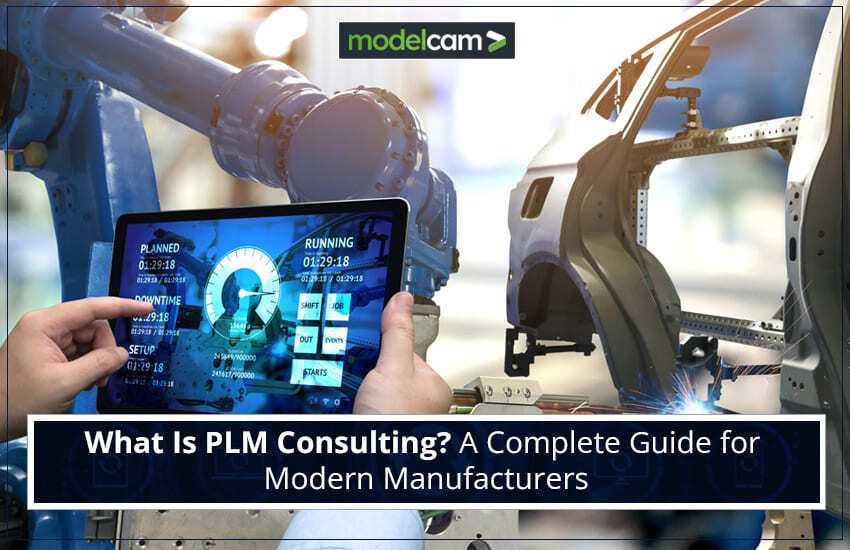
Managing product data, procedures, and teamwork is more difficult than ever in the cutthroat industrial environment of today. PLM Consulting is essential in this situation. Product Lifecycle Management Consulting is being used more and more by contemporary manufacturers to improve teamwork, expedite operations, and spur innovation throughout the whole product lifecycle.
In order to support long-term digital transformation, this article describes what is PLM consulting, why it is important, how it operates, and how manufacturers should select the best PLM Consulting Company.
Product Lifecycle Management (PLM) consulting is the term used to describe professional advising and implementation services that assist companies in designing, implementing, optimizing, and scaling PLM systems. PLM Consulting Services concentrate on integrating technology with people, data, and business processes, in contrast to software-only strategies.
Fundamentally, what is PLM consulting? It is a structured method that reviews existing product development workflows, identifies gaps, and installs PLM solutions that improve productivity, visibility, and control across the product lifecycle - from idea and design to manufacture, service, and retirement.
Manufacturers rely on PLM Software Consulting to guarantee that PLM platforms support engineering, quality, supply chain, and customer-facing teams without creating data silos.
Recognizing the increasing complexity of goods and supply chains is the first step towards understanding why PLM consulting is important for manufacturers. Delays, rework, and cost overruns are frequently caused by disconnected systems, manual data handling, and inadequate teamwork.
PLM Consulting for Manufacturers guarantees that product data is centralized, version-controlled, and accessible across departments. With the integration of AI in business, manufacturers may also harness predictive insights, intelligent workflows, and data-driven decision-making.
As manufacturers progress toward smart factories and digital companies, Enterprise PLM Consulting becomes vital for increasing operations while preserving accuracy and compliance.
For more understanding about the importance of PLM consulting for modern manufacturers, read our informative blog, “Why PLM Consulting & Services are Critical for Modern Manufacturing”!
The benefits of PLM consulting go far beyond the use of software. PLM consulting produces quantifiable corporate benefits when used properly.
First, by offering a single source of truth for product data, PLM Consulting Services in Manufacturing enhance cross-functional cooperation. Teams in charge of engineering, manufacturing, procurement, and sales operate using consistent, current data.
Second, by expediting approvals, automating processes, and reducing rework, PLM Solutions for Manufacturing contribute to shorter time-to-market. Manufacturers may optimize product development processes and spot bottlenecks early with AI-driven data analysis.
Third, by facilitating quicker reaction to design modifications, higher-quality products, and better traceability, PLM consultancy improves customer experience. Manufacturers can also match product features with actual market demands by using advanced customer data analysis.
Lastly, PLM consultancy promotes scalability, guaranteeing that systems develop in tandem with corporate growth and international operations.
A structured PLM Consulting process promotes successful deployment and uptake. The majority of interactions go through these crucial stages:
Evaluation and Planning
Consultants assess current procedures, data structures, and systems. This stage establishes PLM roadmaps and business objectives that are in line with the aims of digital transformation.
Design of Solutions
Consultants create customized PLM structures, including linkages with CRM, ERP, and sales automation tools, based on requirements.
PLM Implementation Services
System configuration, data migration, workflow automation, and validation are all included in this step. Selecting the appropriate PLM Implementation Partner is essential to reducing interference.
Education and Change Management
Role-based training and best practices in line with PLM Consulting best practices guarantee user uptake.
Support and Optimization
Manufacturers may optimize long-term value through performance monitoring, AI-driven solutions, and continuous improvement.
.jpg)
It's a prevalent misperception that software is the only factor in PLM success. In actuality, there is a significant difference between PLM Consulting vs PLM Software.
The deployment of tools is the main emphasis of PLM software implementation. On the other hand, PLM Consulting deals with governance, processes, and people. Software frequently goes unused or out of alignment with company objectives in the absence of consultation.
PLM Software Consulting makes sure that technology adapts to changing company requirements, supports strategic goals, and interacts easily with current systems. This is particularly crucial in intricate manufacturing settings.
Automation is only one aspect of digital transformation in manufacturing; intelligence is another. By allowing linked, data-driven businesses, PLM consulting services play a fundamental role.
PLM solutions can automate classification, anticipate design issues, and facilitate sophisticated data analysis with the use of AI in business. Manufacturers can easily connect client feedback to product development through integration with Customer Relationship Management (CRM) AI.
Data automation in PLM systems guarantees quicker decision-making for the engineering and sales teams and lowers human error. PLM consulting assists manufacturers in moving from reactive operations to proactive, insight-led strategies as part of larger AI-driven solutions.
Long-term success depends on choosing the best PLM consulting company. Manufacturers should look for partners with established industry expertise, excellent implementation capabilities, and a comprehensive understanding of manufacturing workflows.
From strategy and deployment to optimization and maintenance, a perfect PLM implementation partner provides end-to-end services. Scalability and worldwide preparedness are guaranteed by experience in enterprise PLM consulting.
Businesses that integrate PLM initiatives with business results rather than just technological milestones include Modelcam Technologies, which brings domain experience, technical proficiency, and a consultative approach.
PLM consulting is now a strategic requirement for manufacturers in a time of growing complexity and competition. Product Lifecycle Management Consulting helps manufacturers remain flexible, effective, and customer-focused by enhancing teamwork, boosting innovation, and promoting AI-driven digital transformation.
Manufacturers may maximize the potential of their product data, optimize operations, and create a business that is prepared for the future by investing in the appropriate PLM consulting services.
Let’s connect: www.modelcamtechnologies.com
Email: sales@modelcamtechnologies.com
Mobile no : +91 8237016167
Modelcam Technologies provides a wide variety of Services from ART to PART from Concept Design to Industrial Modeling and Analysis for final Manufacturing.
©Copyright 2026. All rights reserved by Modelcam Technologies Private Limited PUNE.