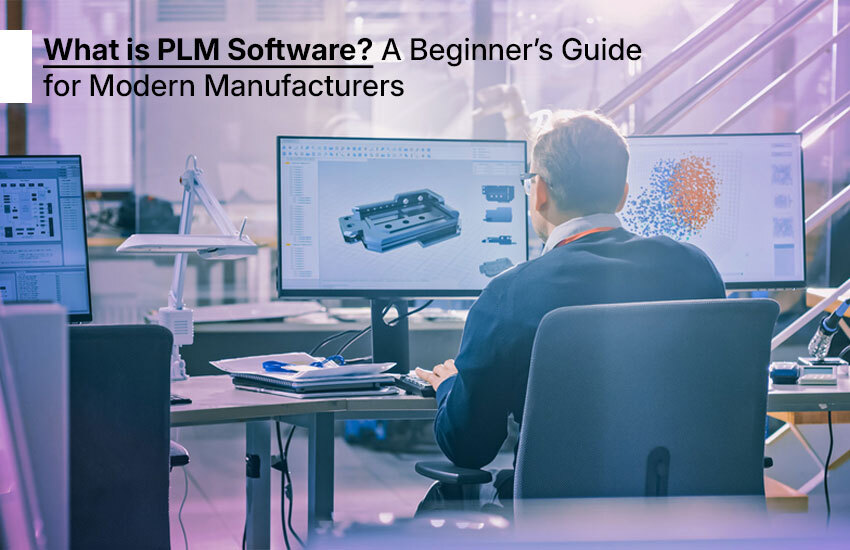
It is now essential to manage product data effectively from inception to retirement in the fast-paced, innovation-driven manufacturing industry of today. PLM software (Product Lifecycle Management) changes everything in this situation. Understanding and implementing the appropriate PLM software solutions may greatly increase operational efficiency, speed up time-to-market, and enhance product quality, regardless of the size of your company.
This blog provides an easy-to-read summary of PLM software, including its features, advantages, and the reasons why it's crucial for contemporary manufacturers. We'll also look at how new technologies are changing the PLM landscape, including predictive analytics and artificial intelligence in business.
A digital tool called PLM software assists companies in managing a product's whole lifecycle, from conception and design to manufacturing, maintenance, and disposal. For engineering data management, documentation, design revisions, BOM (Bill of Materials) management, cooperation, and compliance, it acts as a central location.
For manufacturers, one of the main advantages of PLM software is that they facilitate seamless departmental team cooperation through lifecycle collaboration capabilities, dismantling organizational silos and lowering errors that usually result from misunderstandings or disjointed systems.
Explore more about PLM software by reading our blog, “Why Choose PLM Software? Boost Efficiency with Modelcam Technologies”!
Let's dissect PLM's fundamental elements to gain a better understanding:
Producing high-quality goods is no longer the only goal of manufacturing; it's also about doing it more quickly, efficiently, and economically. This is how PLM software is useful:
Traditional PLM systems were mostly on-premises and needed a large amount of IT infrastructure. These days, cloud-based PLM solutions provide speedier implementation, scalability, reduced upfront expenses, and remote access.
For example, Modelcam Technologies uses PTC Windchill PLM, a top cloud-based PLM platform that guarantees enterprise-grade security and permits flexible deployments. These technologies enable businesses to innovate without being constrained by antiquated infrastructure.
Check out our blog post, “Windchill PLM Software: The Future of Product Lifecycle Management”!, and learn more about Windchill PLM!
Businesses frequently confuse PLM software with ERP (Enterprise Resource Planning). They serve different functions even if they are business systems:
Organizations can get a comprehensive understanding of business processes and product development by integrating PLM and ERP.
AI is becoming increasingly prevalent in PLM systems as it develops. Product Lifecycle Management is being revolutionized by AI-driven solutions in the following ways:
Manufacturers can use sales automation tools and AI-powered customer relationship management (CRM) to expedite the customer journey from inquiry to delivery by incorporating AI.
The modern consumer demands quick delivery of individualized, superior items. By using customer data analysis to match product characteristics with real user preferences, PLM improves the customer experience.
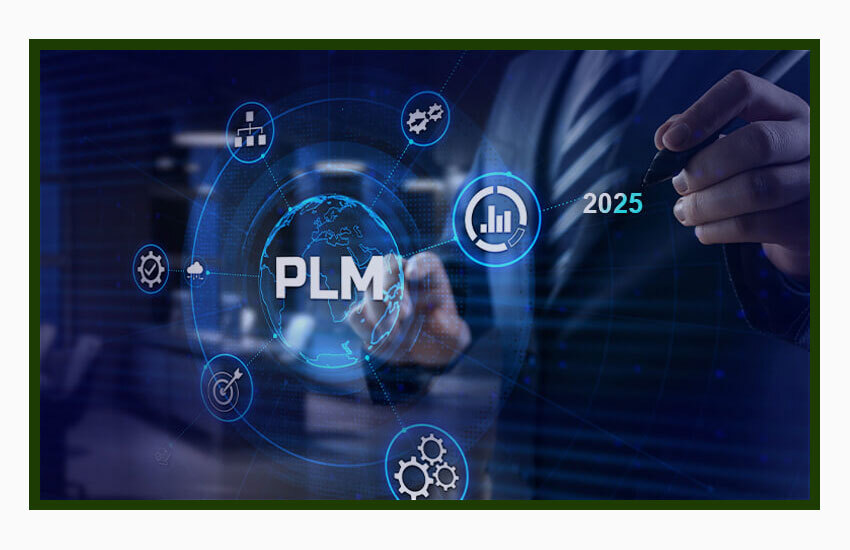
Manufacturers should think about scalability, future preparedness, support, user interface, and integration capabilities when choosing a PLM tool. Modelcam Technologies' PTC Windchill PLM is regarded as the best PLM software in India. It is a good option for companies looking to undergo digital transformation since it facilitates cross-functional cooperation, end-to-end engineering data management, and product data management.
Indian manufacturers receive not only a technological platform but also a strategic roadmap for PLM success thanks to Modelcam's domain expertise and consulting approach.
PLM software is essential for manufacturers in a world where success is determined by speed, accuracy, and creativity. It serves as the digital foundation of your product development process, guaranteeing that your teams collaborate, that data is safe and available, and that your company maintains its agility in a cutthroat industry.
More intelligent manufacturing, predictive planning, and better customer experiences are made possible by modern PLM systems like PTC Windchill PLM, particularly when combined with analytics and AI technologies.
Now is the moment to investigate what PLM tools for manufacturers may offer you, whether your goal is to increase productivity, shorten the time it takes to launch a product, or use AI in your company.
Do you need assistance implementing PLM?
Get in touch with Modelcam Technologies, your go-to source for innovative PLM software solutions and top-notch engineering. To begin, go to www.modelcamtechnologies.com!
Let’s connect: www.modelcamtechnologies.com
Email: sales@modelcamtechnologies.com
Mobile no : +91 8237016167
Modelcam Technologies provides a wide variety of Services from ART to PART from Concept Design to Industrial Modeling and Analysis for final Manufacturing.
©Copyright 2026. All rights reserved by Modelcam Technologies Private Limited PUNE.