Businesses are constantly under pressure to increase productivity, decrease downtime, and provide better customer service in the age of Industry 4.0. Conventional maintenance models, whether planned or reactive, frequently fail to maximize performance or stop unplanned malfunctions. In this regard, digital twin technology has become revolutionary, especially when used as the foundation for predictive maintenance plans.
Organizations may anticipate errors and optimize operations in previously unthinkable ways by combining Digital Twin models, IoT-enabled sensors, Machine Learning algorithms, and real-time monitoring. Businesses such as Modelcam Technologies are assisting sectors in utilizing these advancements to propel genuine digital transformation.
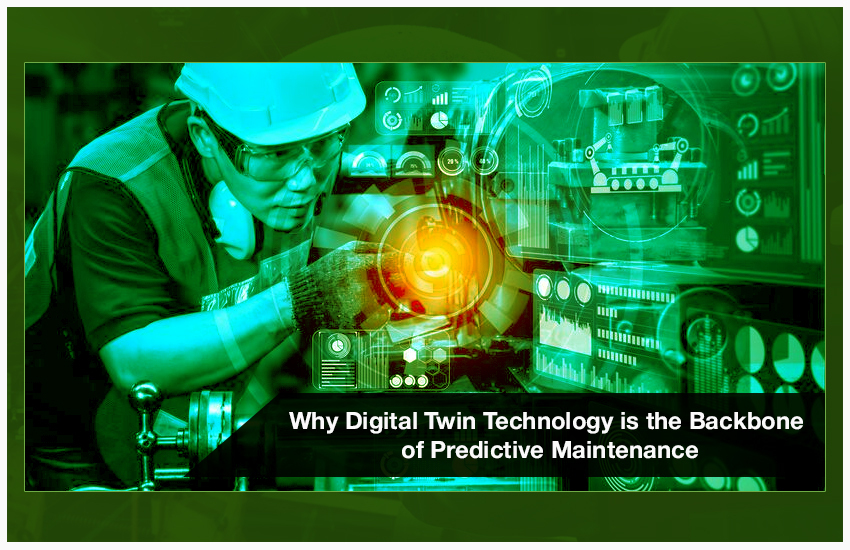
A digital twin is a simulation or virtual copy of a real system, process, or asset. This digital twin model or architecture uses continuous data from sensors and sensor networks, along with sophisticated data analytics and AI-driven solutions, to replicate the behavior of real-world machinery.
Engineers can see, anticipate, and manage how machines will behave in various situations by simulating the asset in a cyber-physical system - without actually testing them. This lowers risk, guarantees optimal maintenance plans, and permits better informed decision-making.
For more knowledge on digital twin technology, check out our blog post, “What is Digital Twin Technology? Applications and Benefits Explained”!
Predictive maintenance is more than just regular examinations. It uses real-time monitoring, data analysis, and simulation to anticipate failures before they happen, as opposed to repairing machines after they break or performing regular maintenance on them.
Digital twin technology enables this in the following ways:
Gathering Data Using Sensors and IoT
IoT devices and sensor networks installed in smart machines gather performance data continuously.
Including the Digital Twin Model
A live, changing replica of the object is produced by feeding the data into a digital twin architecture.
Machine Learning and Data Analytics
Artificial intelligence (AI)-powered solutions and sophisticated machine learning algorithms examine trends to spot irregularities and possible malfunctions early on.
Using Simulation to Gain Predictive Insights
Engineers assess how systems will respond to particular scenarios by running simulations on the virtual replication. By doing this, expensive trial-and-error with tangible assets is avoided.
Results That Are Actionable
Predictive maintenance that minimizes downtime, maximizes performance, and prolongs asset life is made possible by real-time notifications sent to maintenance staff.

AI in Business Operations
AI-driven solutions are essential to data automation and analysis for customers, providing operational and customer-facing teams with actionable insights.
Edge Computing
Edge computing lowers latency by processing sensor data near the source, allowing for real-time monitoring and prompt decision-making in sectors like manufacturing and aircraft.
Cloud Computing
Teams can obtain predictive insights globally and work across geographical boundaries thanks to the management of massive data storage and large-scale data analytics provided by cloud computing.
When combined, these technologies create a strong framework for digital transformation where predictive maintenance is the rule rather than the exception.
Decreased Downtime
Real-time notifications minimize expensive disruptions by ensuring that machines are maintained prior to breakdown.
Savings on expenses
Organizations invest in focused treatments led by AI-driven data analysis rather than reactive repairs.
Improved Experience for Customers
Customer relationship management (CRM) AI is directly enhanced by reliability. Trust and satisfaction are fostered by consistent product availability and service quality.
Better Lifecycle of Assets
Ongoing monitoring prolongs the life of equipment and postpones capital expenditures.
Data-Driven Marketing Techniques
Organizations may easily coordinate inventory, after-sales support, and service schedules by utilizing sales automation systems in conjunction with operational data.
Digital twin technology has an impact that goes well beyond operations; it changes the way customers interact with businesses. Consider a manufacturer whose equipment in the client's factory seldom ever breaks down thanks to preventative maintenance made possible by predictive warnings. This improves consumer loyalty and trust in addition to cutting down on downtime.
AI in business also incorporates client usage data into the digital twin model, allowing for better warranty programs, customized service packages, and customer data analysis to increase customer happiness.
For company executives, predictive maintenance powered by digital twin technology is about more than just preventing equipment failure; it's about accelerating growth.
Sales automation tools guarantee that the processes of the service and sales teams incorporate predictive information from the digital twin.
Customer relationship management (CRM) AI enables companies to tailor services according to usage information gathered by sensors and IoT (Internet of Things) devices.
Businesses may open up new service-based revenue streams and guarantee that customers always receive value by integrating predictive analytics into daily operations.
Digital twin technology will play an increasingly important part in predictive maintenance as the industry embraces cyber-physical systems and depends more on AI-driven solutions. Cloud computing and machine learning-driven advanced data automation will keep improving asset reliability and forecast accuracy.
Additionally, technical performance will be in line with business expansion through connectivity with CRM AI systems and sales automation tools. Predictive maintenance will become a key component of digital transformation and customer-centric strategies as a result of this collaboration.
The integration of digital twin technology, IoT, AI-driven data analysis, and predictive maintenance is critical to the future of industrial efficiency. Businesses may prevent problems before they arise, minimize downtime, and improve customer experience by building a virtual replication of assets and continuously learning from real-time data.
In addition to attaining operational excellence, companies that adopt this change - such as those working with Modelcam Technologies - are also integrating predictive data with long-term growth, sales, and customer service plans.
The foundation of predictive maintenance and the next stage of industrial digital transformation, digital twin technology is simply more than just an invention.
Let’s connect: www.modelcamtechnologies.com
Email: sales@modelcamtechnologies.com
Mobile no : +91 8237016167
Modelcam Technologies provides a wide variety of Services from ART to PART from Concept Design to Industrial Modeling and Analysis for final Manufacturing.
©Copyright 2026. All rights reserved by Modelcam Technologies Private Limited PUNE.